Software development collaboration

Ship software with people andAgents
in one workflow

Jira and TAPD can record work, but they do not move code forward. HiFox connects requirements, assignment, parallel development, testing, and human acceptance so Agents become real development teammates.

Why replace Jira

The software development loop

From one task to an accepted code delivery

Put the work developers actually do into one task flow: context finds the right owner, Agents execute in isolation, verification returns to the task, and people make the critical decisions.

Bring your Agent tools

Connect every Agent tool to one team workspace

Connect Claude Code, Codex, OpenCode, OpenClaw, Hermes, Pi, and other CLI-based Agent tools directly. Use the Coding Plan or API key you already have, or connect APIs from your preferred model providers.


01Task & context

Turn requirements and bugs into executable tasks

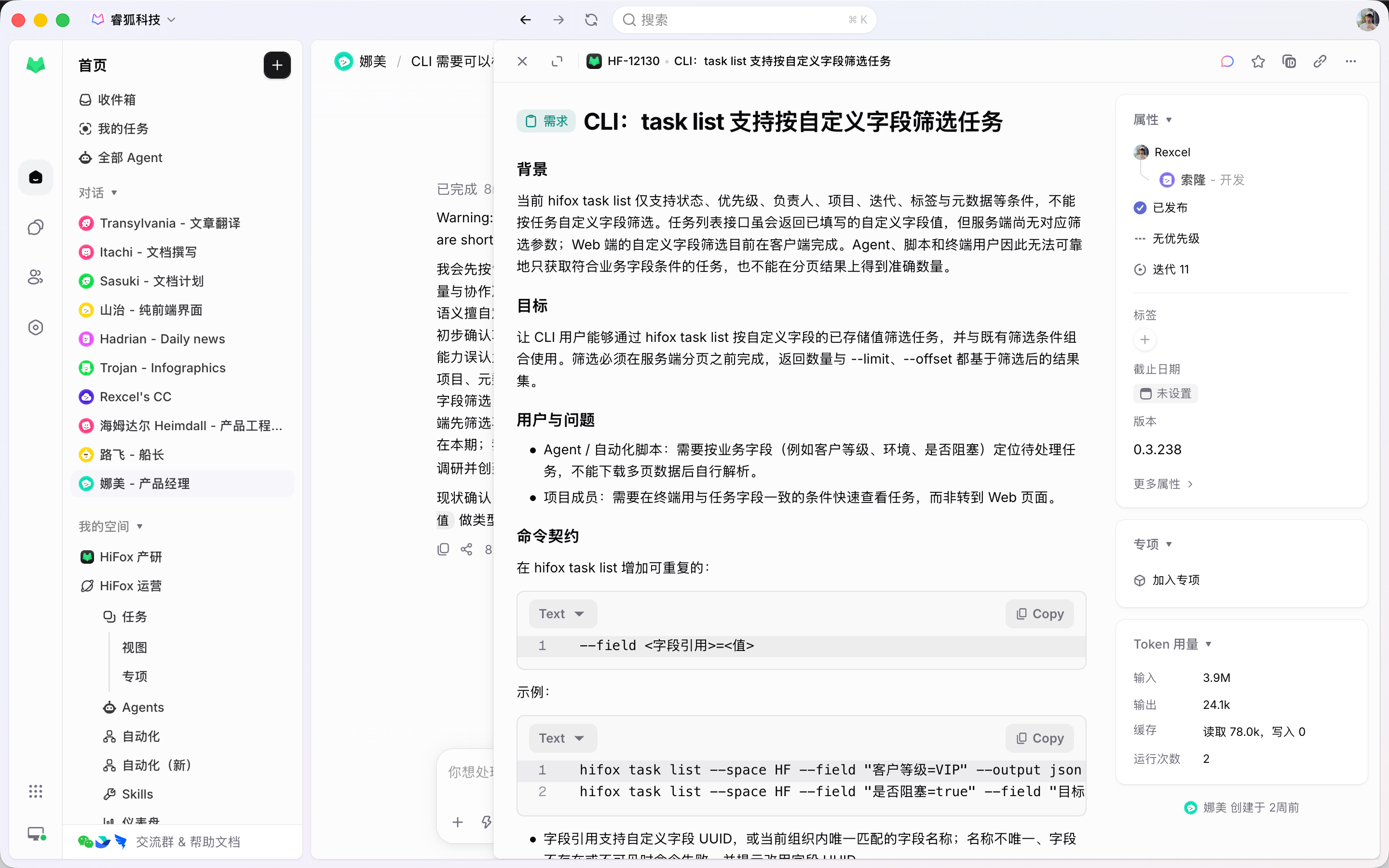
A requirement, bug, or piece of technical debt is more than a backlog line. It carries goals, boundaries, acceptance criteria, codebase context, and the discussion needed to execute it.

  • Goals, boundaries, and acceptance criteria stay visible
  • Context follows the task instead of living in chats and personal terminals
Software development requirement and acceptance task
02Assignment

Assign an Agent just like a teammate

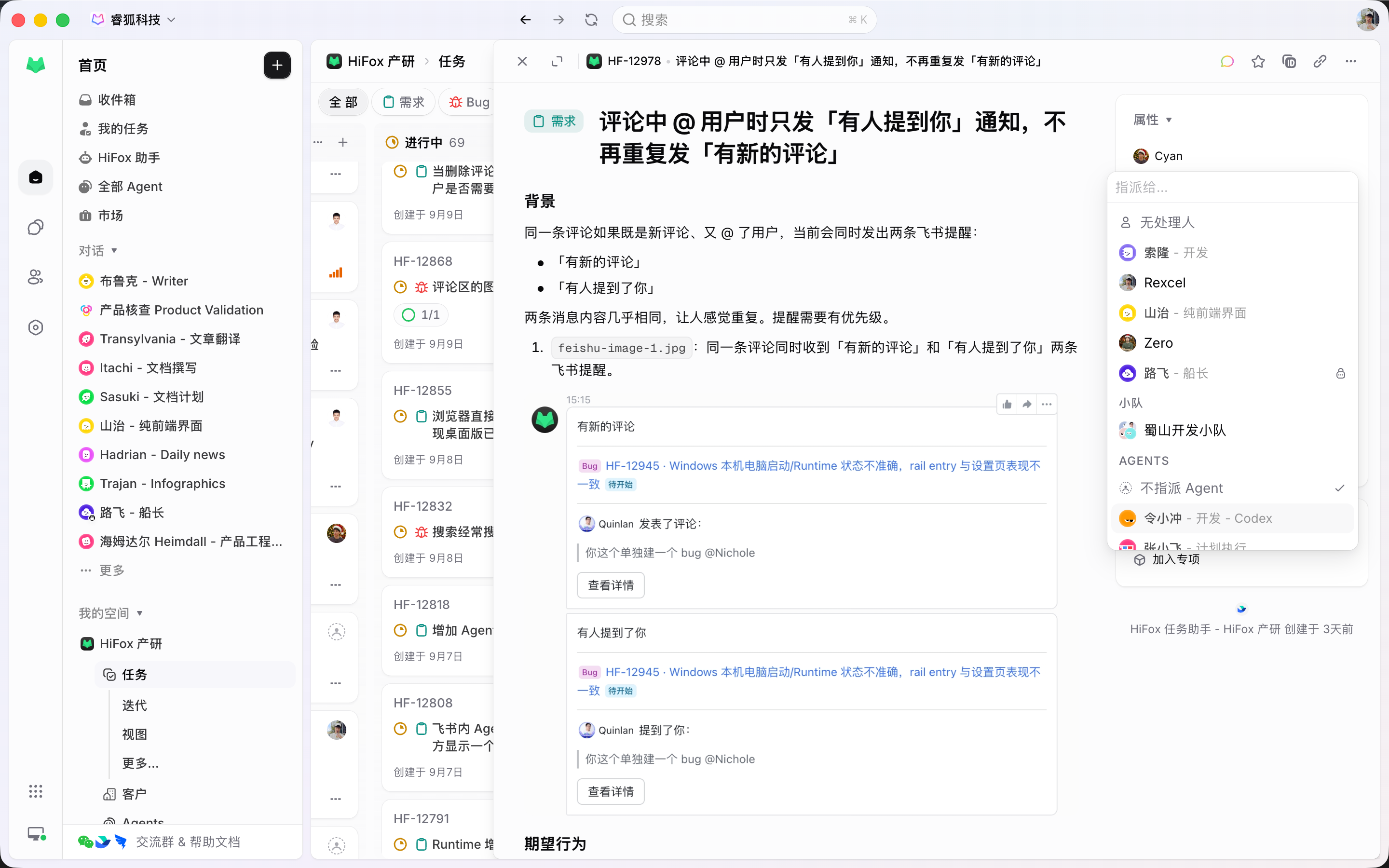
A person or an Agent can own the work. Assignment can include the repository, runtime, skills, and execution rules, while discussion and results stay on the task timeline.

  • People and Agents share one owner and status model
  • Execution rules, skills, and product context stay managed together
Assign a development task to an Agent
03Isolation & parallel work

Let multiple Agents develop in isolated worktrees

Frontend, backend, bug-fix, and test-coverage work can move in parallel. Each Agent works in its own worktree, so changes do not overwrite the main workspace.

  • Parallel execution without colliding code or environments
  • Progress, blockers, and change summaries return to the task
04Verification & acceptance

Return verification to the task and leave acceptance to people

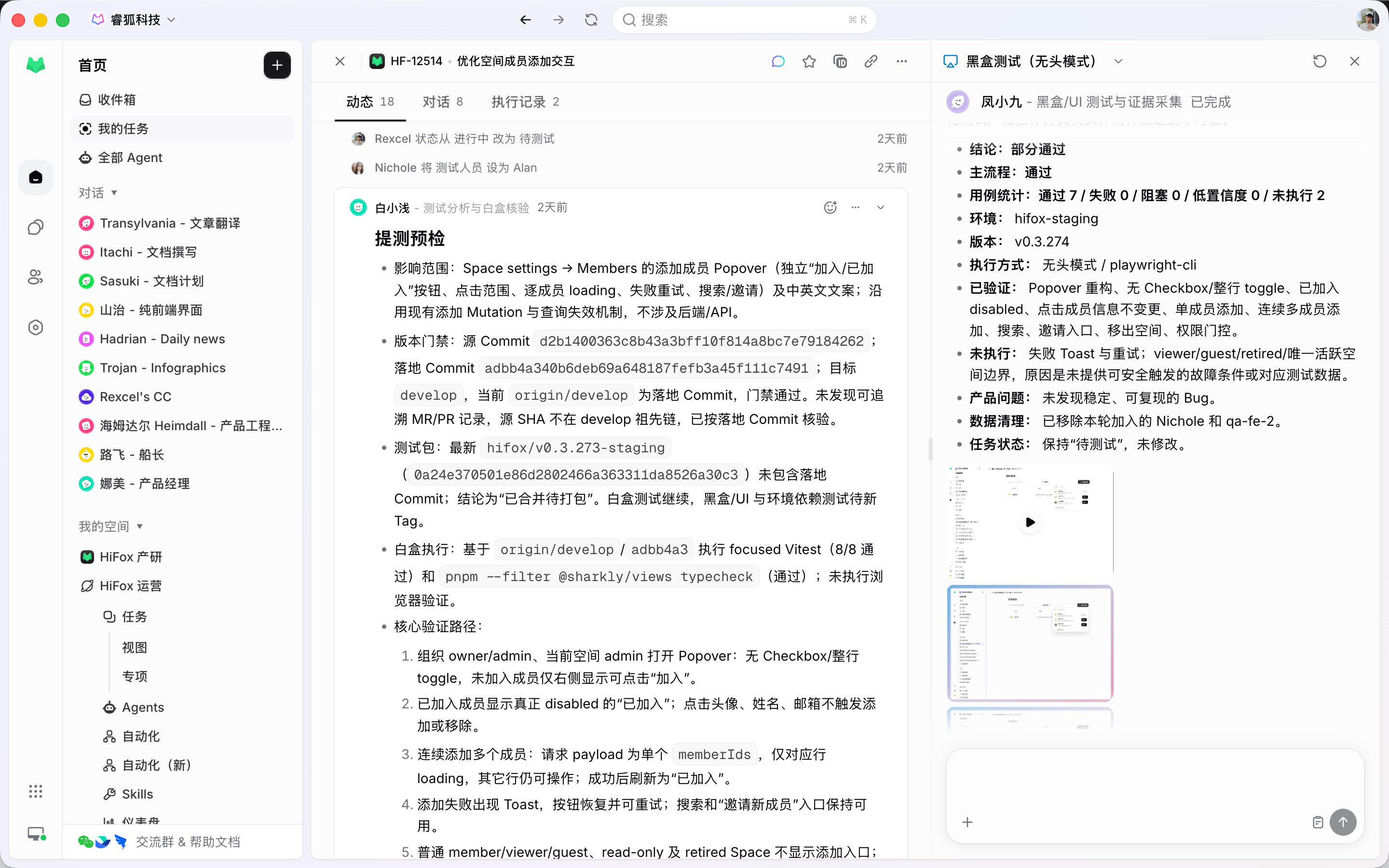
Agents run tests, typecheck, and builds, then attach the change summary and known limits. People review, request changes, merge, or release with the decision trail visible.

  • Test evidence, code changes, and delivery summaries stay together
  • People own direction, authorization, acceptance, and release decisions
Software development verification and human acceptance record

One shared work model

Not more AI chats—a development team that works together

HiFox puts people, Agents, and development context into one collaboration model. Teams can move work in parallel while seeing who owns each task, what is blocked, and whether delivery is trustworthy.

01

One task, status, and owner model

People and Agents share requirements, bugs, owners, dependencies, comments, and delivery history instead of maintaining two workflows.

02

Context follows the task

Repositories, conventions, past discussion, skills, and execution results stay in the task context, reducing repeated explanations and lost information.

03

Parallel execution with isolation

Each Agent uses its own worktree and runtime so the team can safely move multiple development tasks forward at once.

04

Automation with human decisions

Agents research, code, test, and report. People own priority, authorization, review, merge, and release.

Agents move execution forward. People own direction and final acceptance.

Software collaboration is not handing decisions to a black box. Every execution has an owner, context, verification evidence, and a result the team can trace.

An AI-native Jira alternative

Move from tracking work to getting work finished

Jira and TAPD can still record backlog, status, and comments. AI-era development also needs an execution, feedback, and verification loop. HiFox connects each task directly to the delivery capabilities of people and Agents.

Traditional project management

Record and route work

HiFox collaboration workflow

Execute and deliver work

Work records

Create requirements, bugs, and statuses

Create a task with an owner, context, and acceptance criteria

Execution

Progress is scattered across comments, links, and terminals

A person or Agent owns and advances the task directly

Parallel development

Teams coordinate branches and environments manually

Agents execute in isolated worktrees

Progress

Statuses, comments, and reports are updated manually

Progress, blockers, code changes, and results return to the task

Testing & acceptance

Verification is collected and added by people

Evidence returns with delivery, then people make final acceptance decisions

You do not need to rebuild your development system at once

Keep the projects, cycles, and history your team knows. Start with existing work, then gradually move Agent execution and delivery into HiFox.

See integration and migration options
01

Import existing projects and tasks

Start from real work in Jira, TAPD, or the tool your team already uses.

02

Map statuses and owners

Keep the current workflow while bringing people and Agents into one responsibility model.

03

Move the execution layer gradually

Start with one task type, then expand to testing, fixes, and continuous delivery.

HiFox collaboration workflowJiraTAPDLinearPingCodeTeambitionONESGitHub IssuesGitLab Issues

Start with real development work

Bring Agents into your software workflow

No process rebuild required. Start with a real requirement or bug and see execution, verification, acceptance, and status updates return to one task flow.

01

Connect a runtime and codebase

Give Agents access to the code, conventions, and product context they need in the right execution environment.

02

Configure development Agents

Set up Agents for requirement breakdown, coding, testing, and bug fixing with clear skills and reporting rules.

03

Assign the first development task

Give a real requirement or bug to a person or Agent and track delivery, verification, and final acceptance.

Software development FAQ

Collaboration, migration, and Agent delivery

Does HiFox replace Claude Code, Codex, or other coding tools?

+

No. HiFox handles team-level assignment, context, collaboration, and tracking. You can keep using Claude Code, Codex, or other CLI Agent tools for execution.

What is the core difference between HiFox and Jira?

+

Jira is strong at recording and routing work. HiFox connects each task to execution by people and Agents, code changes, verification results, and human acceptance.

Do we have to abandon Jira immediately?

+

No. Teams can keep Jira for projects and history, start by syncing existing work, and gradually move Agent execution, testing, and acceptance into HiFox.

How do parallel Agents avoid overwriting one another?

+

Each task can run in its own worktree and runtime. Code changes stay isolated, and the team decides what to merge after review instead of overwriting the main workspace.

Will an Agent merge or release code automatically?

+

Agents can develop, test, and report results, while the team decides on merge and release actions based on permissions and acceptance evidence.