The group topic is the entrance
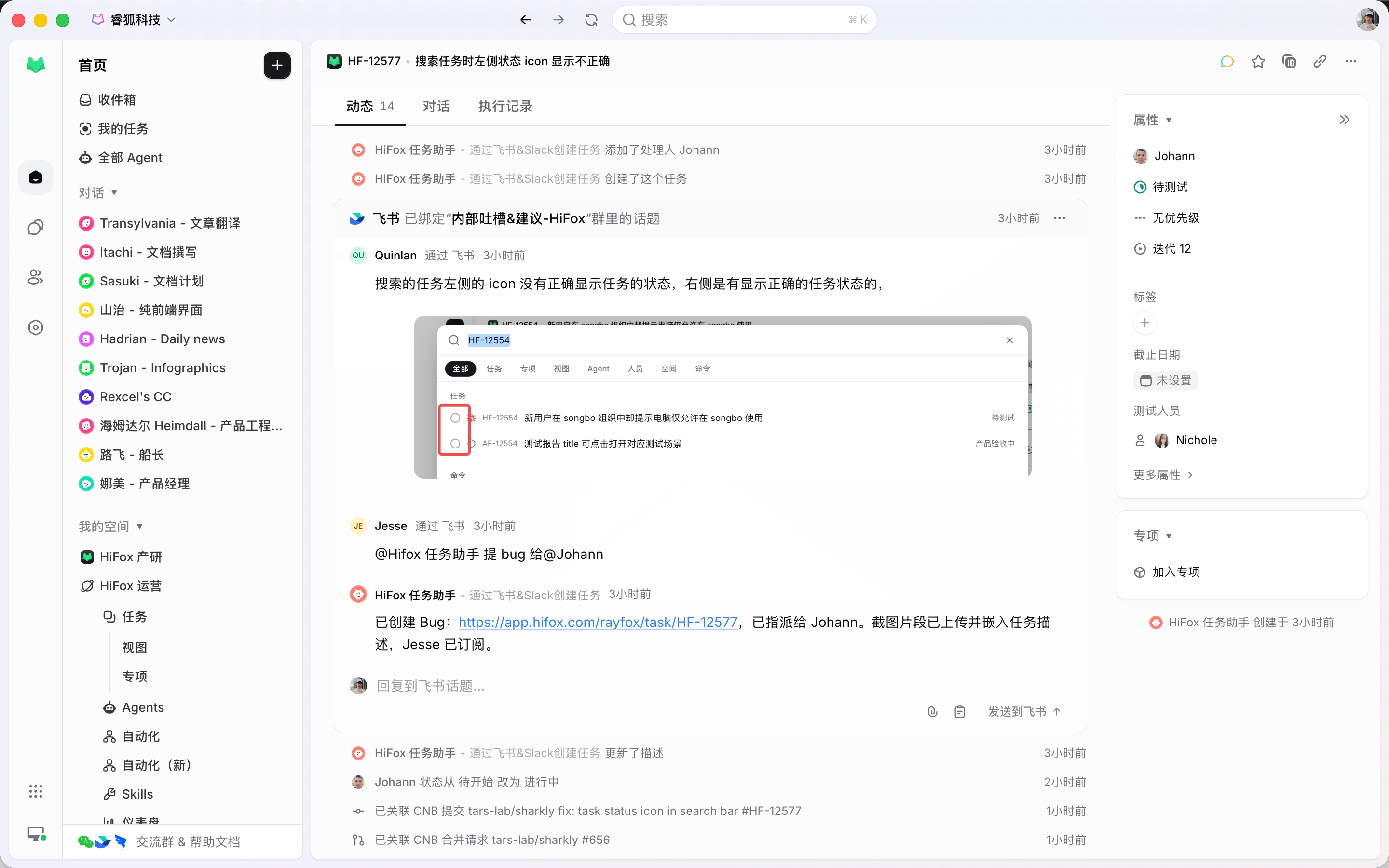
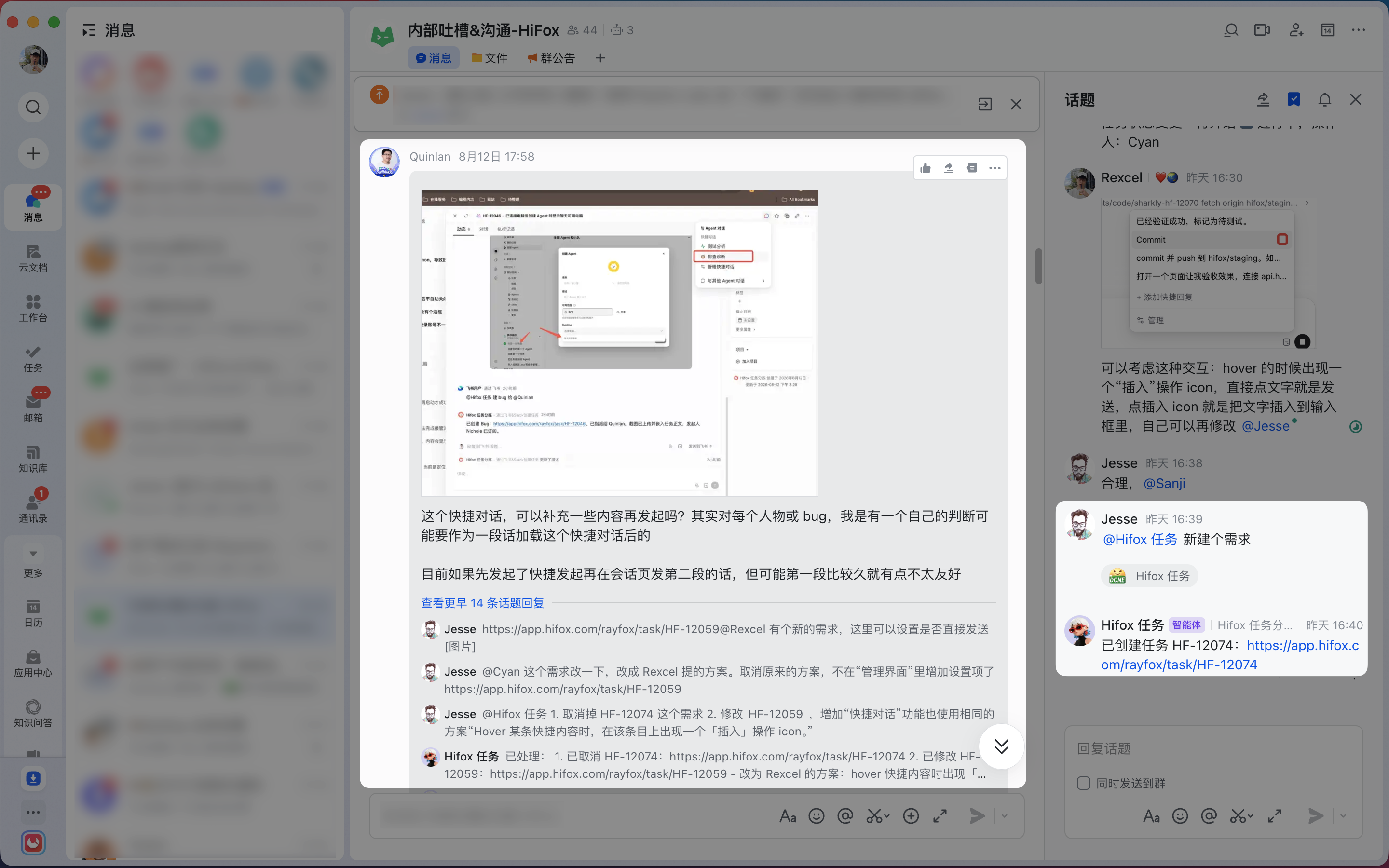
A suggestion in a Feishu group binds to a Task, and the discussion there follows it. Whoever raised it never opens a second system.

Suggestions arrive from Feishu group topics, forms, and email, and become Tasks. Progress and conclusions go back to the same thread, so whoever raised it never has to switch tools. Agents do the investigation and bring back evidence; a person confirms the conclusion.
Receiving, follow-up, closure
User suggestions arrive from Feishu group topics, forms, and email, and become Tasks. Agents carry the investigation, and a person confirms the conclusion before it returns to the thread.
A suggestion in a Feishu group binds to a Task, and the discussion there follows it. Whoever raised it never opens a second system.
An Agent takes confirmed investigation work and returns reproduction steps, logs, and findings to the Task. The assignee confirms before the conclusion goes out.
Status changes and the final conclusion post back to the original group topic, so anyone following it sees the outcome without a separate update.
Support Workflow
Where a suggestion came from, what the Agent did, and where the conclusion went all live on the same Task.
A suggestion in a Feishu group binds to a Task, and the discussion syncs across. Progress and the conclusion go back to the same thread, so neither side ends up telling a different story.
An Agent reproduces the problem, researches it, and writes up the finding, and the output comes back with its evidence attached. The assignee confirms it before the conclusion reaches the group.
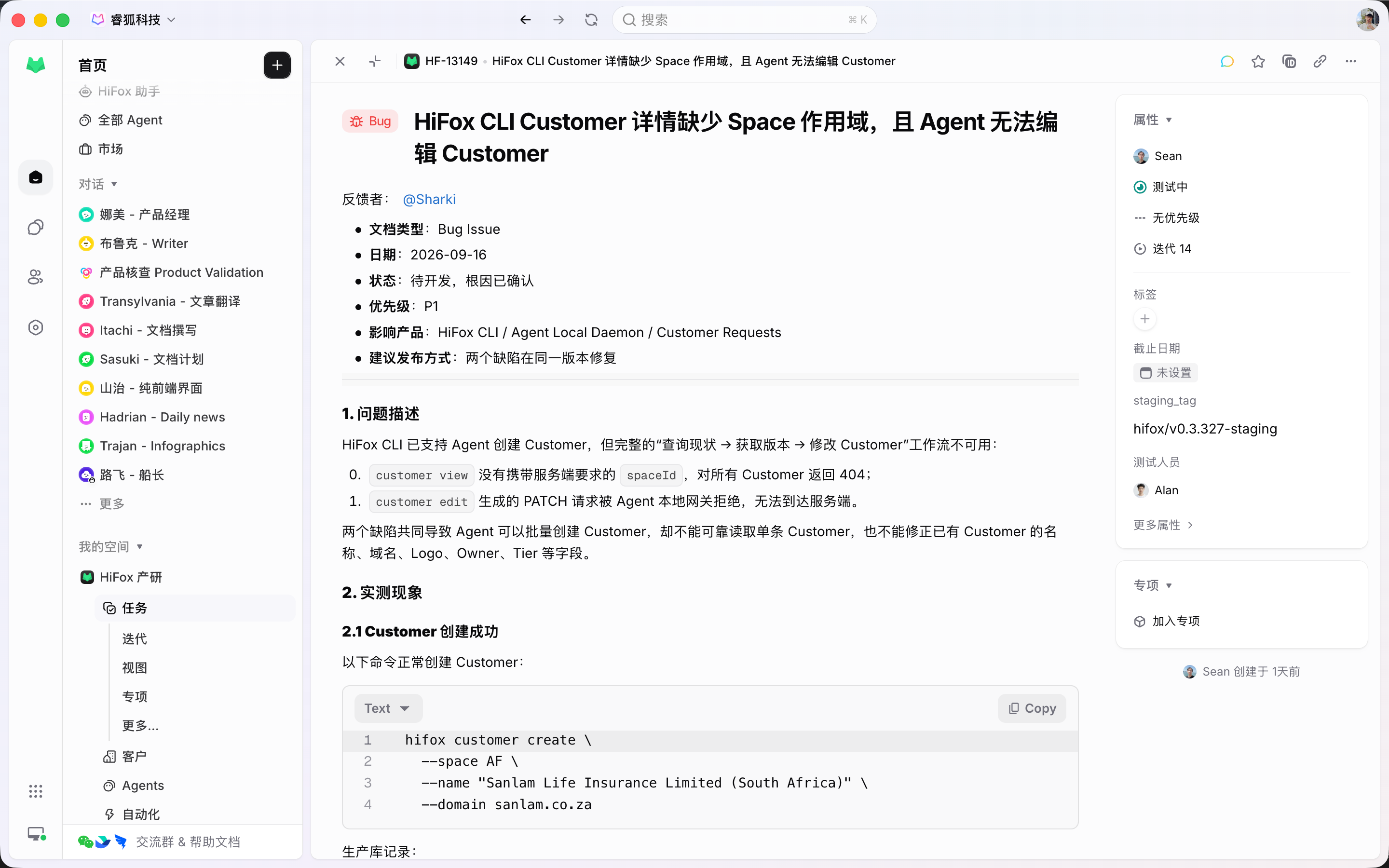
Write the requirement down and assign it to an Agent on the Task. The Agent picks it up in the comments, builds it in an isolated workspace, and returns the change and the process to the same Task. Whether it merges stays a human call.
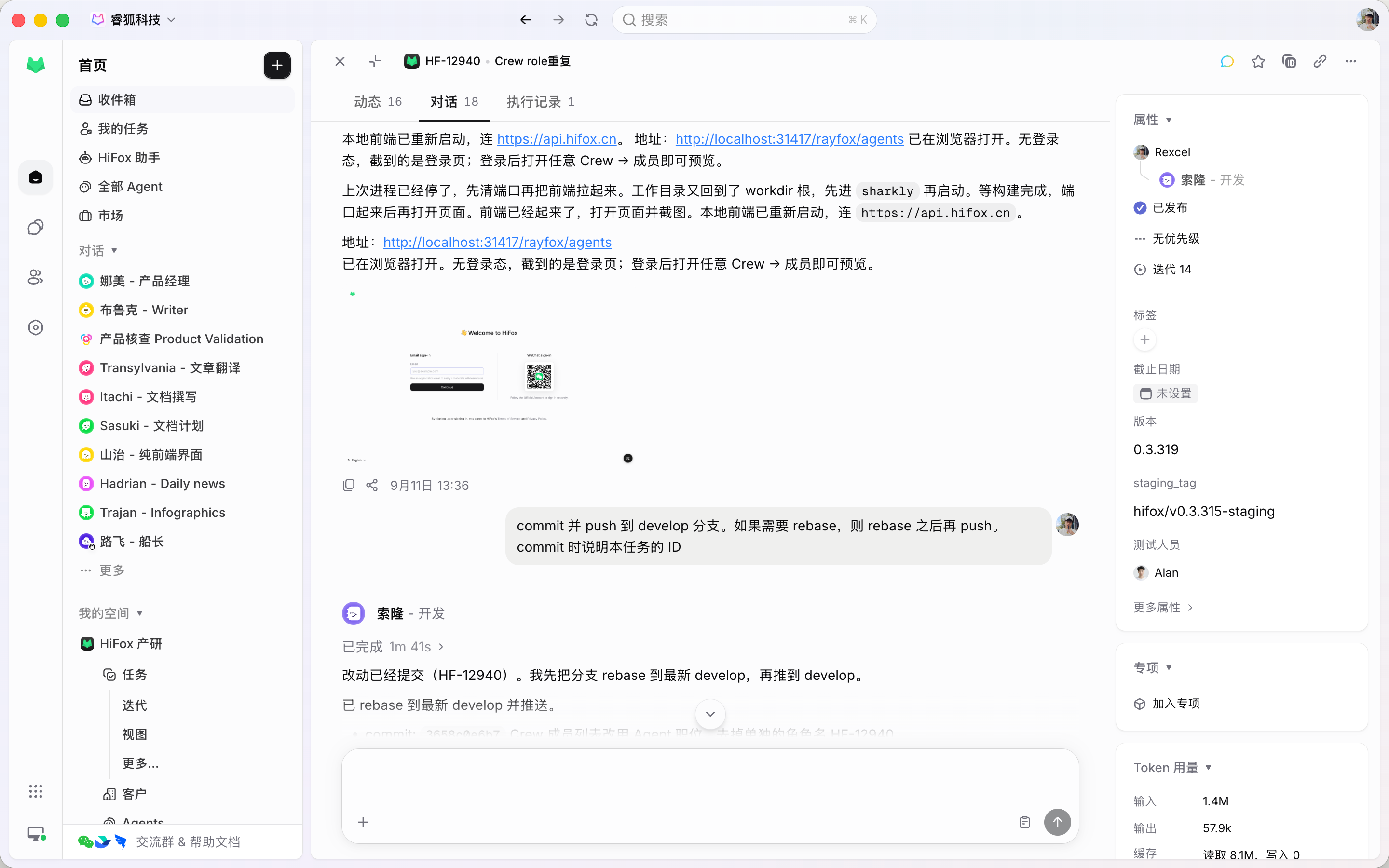
Once the change is in, an Agent runs the regression and attaches the cases, the environment, and the results to the same Task. When the conclusion goes back to the group, there is a record behind it that anyone can open.
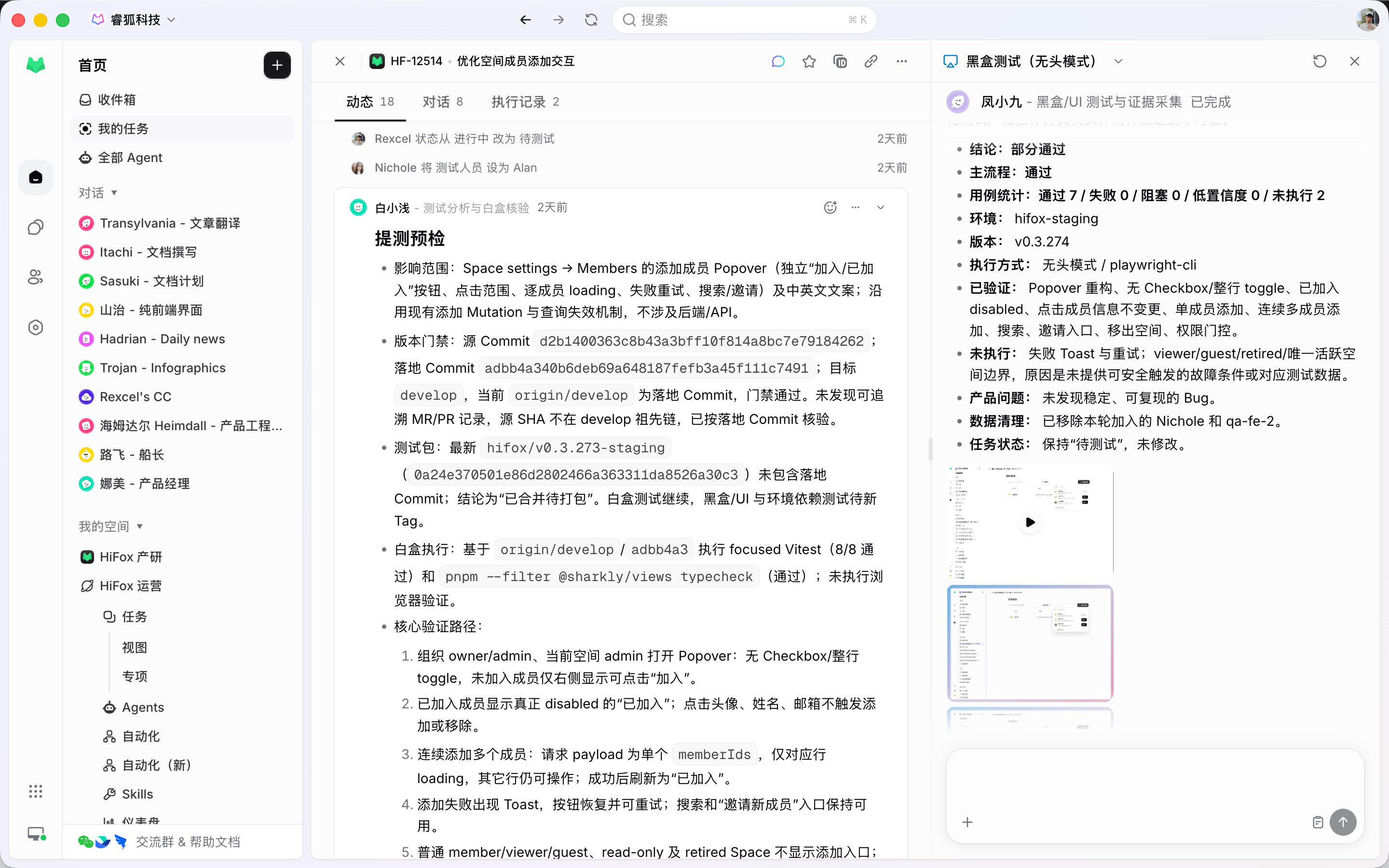
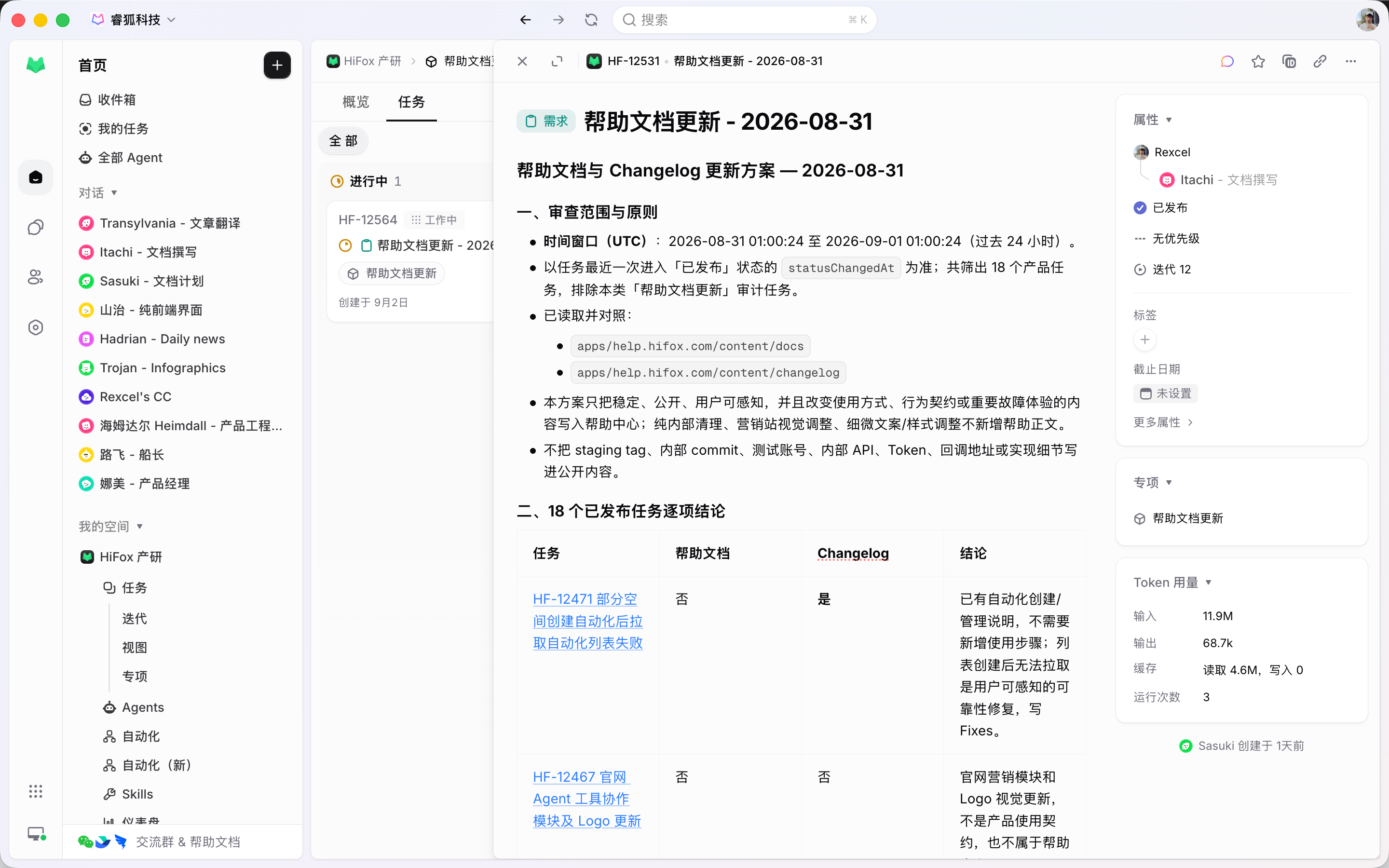
Once Tasks reach a released state, an Agent turns them into help-doc and changelog drafts. The docs owner reviews before anything goes out.
Directly connect Claude Code, Codex, OpenCode, OpenClaw, Hermes, Pi, and other Agent tools that support CLI usage. Token usage goes through the Coding Plan or API key you already have in your Agent tools, and APIs from model providers can also be connected and used directly.
The support system
Tasks, group topics, Inbox, and Automations define how a support Space runs. Agents execute on that system.
The write-up, the reproduction steps, status, assignee, and comments stay on one Task.
Feishu and Slack topics bind to Tasks, with messages and progress syncing both ways.
Tasks waiting on a confirmation, a review, or a reply gather here instead of going quiet.
Rules driven by schedules, status changes, and comment phrases, with a full run record.
Two-way sync with TAPD and ZenTao; GitHub and GitLab changes link back to Tasks.
Status changes and the final conclusion post back to the original topic, where anyone following it can see them.
Quality of life, built in
Status, conversation, and execution attach to the same Task, so volume never turns into chaos.
Suggestions come in from the group and conclusions go back to it, Agents do the digging, and people confirm.
Start
Collect suggestions into one queue, bind the group topics, and hand the investigation to Agents.
Connect a Feishu group topic to the Space, and suggestions there become Tasks.
Set task types, priorities, and assignees, then save the Views daily follow-up runs on.
People confirm and publish the conclusion; Agents take investigation, reproduction, and write-ups.
FAQ
Create Tasks straight from a Feishu group topic, or bring them in through forms and integrations. Once a suggestion becomes a Task it waits for an assignee instead of sinking into the chat history.
Yes. Status changes and the final conclusion post back to the original group topic, so anyone following it sees the outcome and the team does not have to sync it again by hand.
Bounded, repetitive work: investigating, reproducing, researching, and writing up. An Agent runs with the Task's context and returns findings and evidence to the same Task, while people still confirm and publish.
A person stays accountable. Agent output arrives with its process and evidence, and the assignee confirms it on the Task before anything is published. Blockers and waiting states stay visible, so nothing stalls unnoticed.
No. TAPD, ZenTao, Jira, and similar platforms sync two ways, and history can be imported once. Start with a fresh Space and move over to HiFox gradually.
Automations absorb the routine, and the Inbox gathers everything waiting on a confirmation so the team can drain it by priority instead of losing it in a chat log.
The Task is where it happens. Support writes up the problem and the reproduction steps, assigns an Agent to investigate or a teammate to fix it, and the findings and fixes come back to the same Task before being posted to the group.